策略

AI 搜索时代的营销可见度

OG

OranGEO Team

January 18, 2025

AI 搜索时代的营销可见度

In the wave of generative AI marketing, brands' content creation speed is faster than ever. With AI marketing platforms and tools, companies can generate ad copy in minutes and complete multilingual translations in hours. However, many companies discover that despite producing large amounts of content, it remains "invisible" in AI search results—failing to appear in AI recommendations or be mentioned by AI assistants in response to user queries.

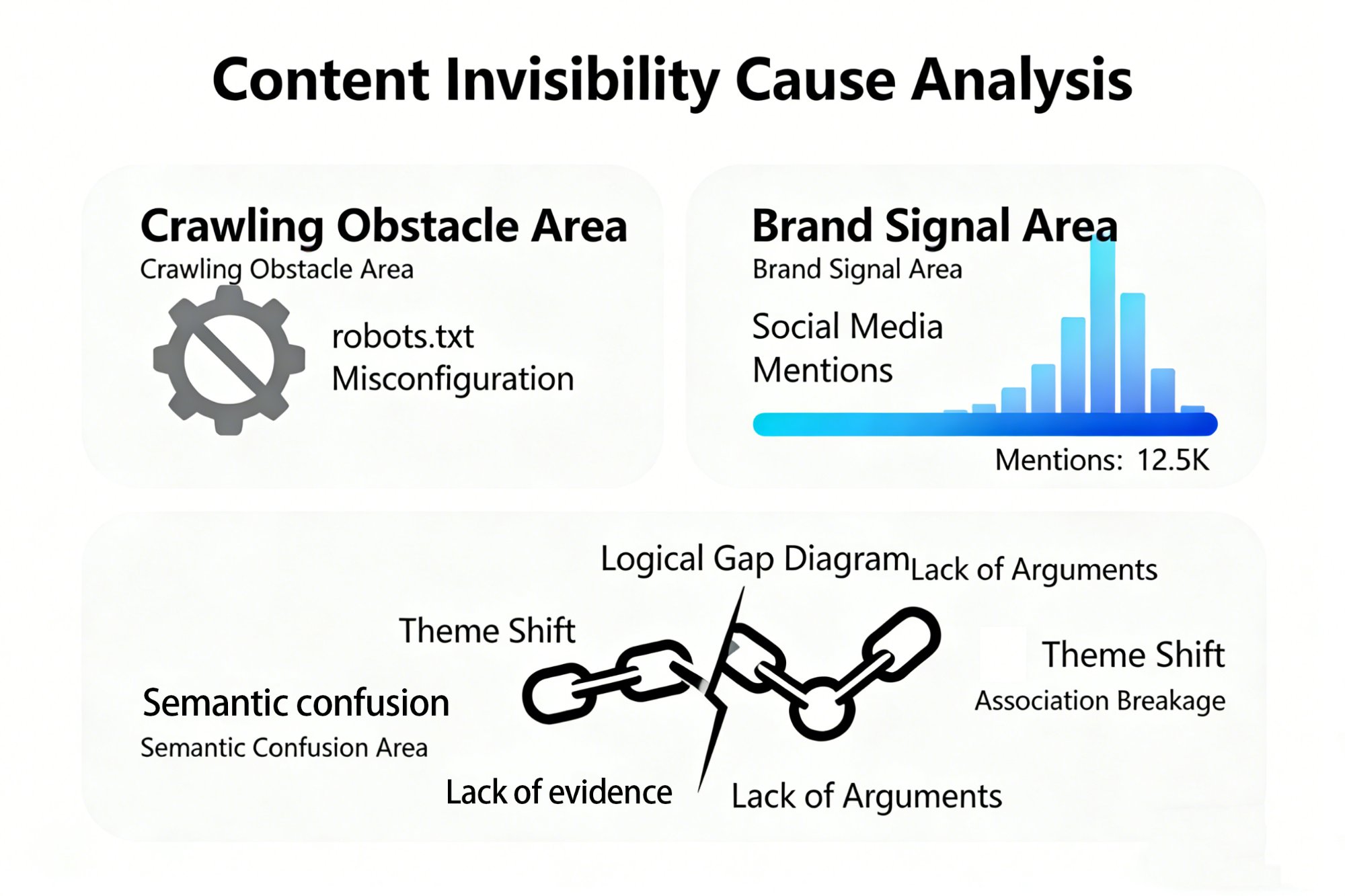
This "content invisibility" problem has become a new challenge for brands in AI marketing. Why does content fail to gain exposure in AI platforms? How can brands break through invisibility barriers?

The Root Causes of Content Invisibility

Understanding why content becomes invisible is the first step to solving the problem. There are several key factors:

  • Lack of Structured Data: AI models prefer well-structured content that's easy to parse and understand.
  • Missing Semantic Context: Content without sufficient context and semantic relationships is harder for AI to comprehend.
  • Low Authority Signals: New or less authoritative sources are less likely to be cited by AI.
  • Poor Content Quality: Generic or low-value content won't be prioritized in AI recommendations.

Step 1: Content Structure Optimization

AI platforms have high requirements for content structure. Well-structured content is easier for AI to understand and index:

Clear Heading Hierarchy: Use standardized heading hierarchies (H1, H2, H3) to help AI understand content framework.

Paragraph Segmentation: Avoid long paragraphs; keep each paragraph focused on one topic, typically 3-5 sentences.

Logical Flow: Ensure content has clear logical progression with smooth transitions between sections.

Step 2: Semantic Enhancement and Context Building

Beyond structure, content needs sufficient semantic information and context for AI to understand:

Complete Context: Provide sufficient background information rather than assuming AI already knows the background.

Semantic Relationships: Use related terms, synonyms, and contextually related vocabulary to help AI understand content themes.

Data and Examples: Provide specific data, cases, or examples to enhance content authority and practicality.

Step 3: Multi-Platform Deployment Strategy

Relying on a single platform is insufficient; brands need multi-platform deployment strategies:

Official Website Optimization: Ensure official website content is well-structured and optimized for AI crawling.

Content Platform Distribution: Publish content on authoritative platforms like Medium, LinkedIn to increase exposure.

Structured Data Markup: Use Schema.org and other structured data formats to help AI understand content.

Practical Case: From Invisibility to Exposure

An AI SaaS startup initially found their product content failed to appear in AI search results. After implementing a comprehensive GEO optimization strategy:

  1. Redesigned all product documentation with clear heading hierarchies
  2. Added more background information, use cases, and data support
  3. Published content on multiple platforms simultaneously

After three months, their content indexing rate on AI platforms increased from less than 10% to over 70%, with brand mentions in AI search results growing 5x.

Conclusion

Solving content invisibility requires systematic strategies covering structure optimization, semantic enhancement, and multi-platform deployment. Through professional GEO optimization services, brands can effectively improve content exposure on AI platforms and gain competitive advantages in AI marketing.

OG

OranGEO 团队撰写

OranGEO 团队由 AI 营销专家、GEO 专家和内容策略师组成,致力于帮助品牌在 AI 搜索时代取得成功。

了解更多关于我们 →

准备好优化你的 AI 可见度了吗?

开始追踪并改善 AI 平台对你品牌的认知。

免费开始